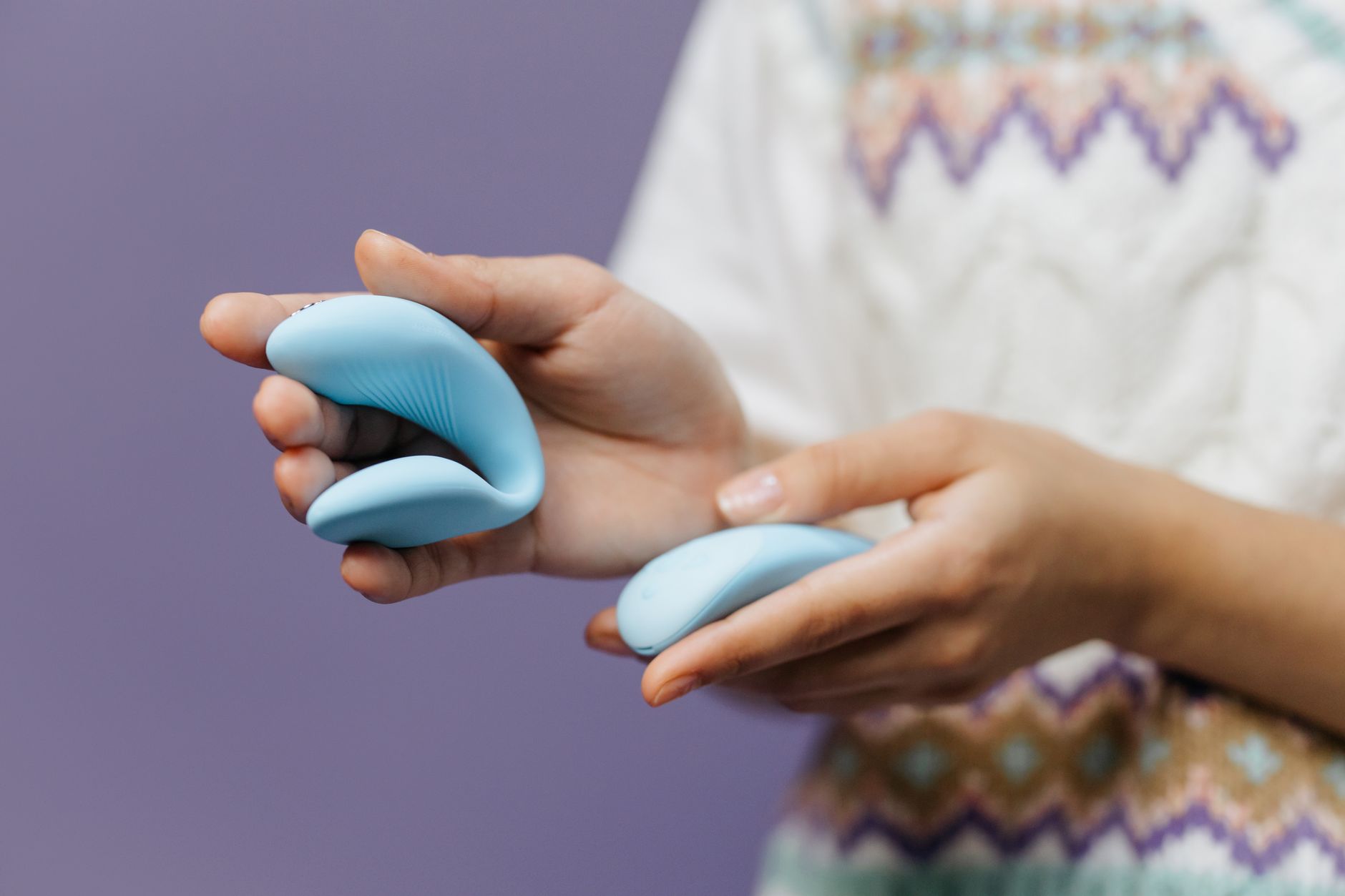
Let's talk about the thing nobody says out loud
You're in a relationship. You have a partner you care about. And you want to use a lemon vibrator alone, without telling them. That doesn't make you unfaithful, selfish, or weird. It makes you someone who understands that your body and your pleasure are yours first.
Here's what I've learned after decades of working with couples: the couples who have the healthiest sexual lives are the ones where both partners maintain a private inner life. Not secrets that damage trust. Privacy that actually protects it.
Why solo pleasure matters in a partnership
There's a myth floating around that masturbation in a relationship means something's wrong. Wrong with the sex, wrong with the attraction, wrong with the commitment. I want to burn that myth down right now.
Solo pleasure and partnered pleasure are doing completely different jobs. When you use a lemon clitoral vibrator alone, you're learning your own body's language. You're finding the patterns, pressures, and rhythms that make you come hardest. You're building what I call "pleasure literacy." That knowledge then makes partnered sex better, not worse, because you know exactly what you need.
The other thing: your partner's arousal and your arousal aren't on the same schedule. They might want sex three times a week. You might need release twice that. Neither of you is broken. You're just different. A lemon vibrator lets you meet your own needs without turning it into a negotiation that breeds resentment.
Most importantly, solo pleasure is where shame loses its grip. There's no performance. No worry about how you look mid-orgasm. No pressure to orgasm on anyone's timeline but your own. That freedom is invaluable.
The guilt trap and why it's usually not what it feels like
A lot of people tell me they feel guilty about masturbating alone because they worry their partner will feel replaced or hurt. Here's what I actually see: that guilt usually isn't about your partner at all. It's about the story you were told about your body when you were younger.
Maybe you heard that touching yourself was dirty. Maybe you absorbed the message that good partners only want sex with their partner. Maybe you grew up in a place where female pleasure was treated like a curiosity instead of a right. That guilt lives in your nervous system, and your partner becomes the person you blame it on.
The truth? Most partners, when they find out their partner masturbates, feel... relieved. One less thing they feel responsible for. One less pressure to be everything all the time.
If your partner actually has a problem with you using a lemon vibrator alone, that's information worth examining. Not because you need to stop. But because it might point to a deeper issue about control, ownership, or insecurity that's bigger than the vibrator. That's worth having a conversation about, and it's worth bringing to a therapist if it becomes an obstacle to your autonomy.
How to use your lemon vibrator privately
Let's get practical. You're going to use a clitoral vibrator while your partner doesn't know about it. Here's how to do it without stress.
Choose a time and space that's naturally yours. The shower. First thing in the morning before they wake up. An afternoon when they're out. You're not hiding. You're just choosing privacy the same way you do for a bathroom break or brushing your teeth. Nothing secretive about that.
Store it somewhere discreet. Not hidden like you're ashamed, but not sitting on your nightstand either. A drawer in your closet. A locked drawer in a bathroom cabinet. Honestly? Most partners will never look. But a basic level of privacy keeps the space feeling like yours.
Keep cleaning simple. Wash your lemon vibrator with warm water and mild soap after every use. It takes 30 seconds. Pat it dry. Done. You're not leaving evidence. You're just maintaining your toy hygiene. This also means less worry about discovery because there's nothing to find.
Don't operate from a place of secrecy. This sounds contradictory, but it isn't. Using your vibrator privately is different from being sneaky about it. Secrecy comes from shame. Privacy comes from boundaries. You're not deleting your browser history or turning off your phone. You're just not narrating every moment of your pleasure to someone else.
When to tell your partner (and how)
Here's where I usually get pushback: I think most people should eventually tell their partner they masturbate. Not because you owe them that information. Because keeping it a secret eventually creates a small, persistent tension in the relationship.
But timing matters. And framing matters.
If your relationship is already rocky around sex or trust, now isn't the time. If your partner has explicitly said they don't want to know, respect that boundary. But in a secure relationship with a partner you trust, the conversation usually goes better than you'd expect.
You don't need to make it a big deal. You don't need to ask permission. You can start small. "I've been taking care of myself more lately, and I feel like I have more energy and better mood overall." Later: "I use a vibrator sometimes. It helps me understand what I need." Later still, if they ask: "I use a lemon vibrator. It's something I do for myself."
Most secure partners get it immediately. "Cool. Happy you're taking care of yourself." Done. No drama.
If your partner reacts badly, that tells you something important about your dynamic that's worth addressing with a professional. Not because you did anything wrong. But because a partner who needs to control your solo pleasure is showing you a red flag about how they see your autonomy.
Why your pleasure isn't selfish
This is the thing I want to hammer home: taking time to pleasure yourself, alone, with a lemon vibrator, is not selfish. It's self-care in the truest sense. You're telling your nervous system that your satisfaction matters. You're telling your body that you're not waiting for someone else's arousal to give you permission to feel good.
That becomes a foundation. When you know how to please yourself, when you understand your own body, when you've given yourself permission to want things: you show up differently in partnered sex too. You're more confident. You know what to ask for. You're not resentful because they haven't figured out your needs.
Your partner benefits. You benefit. Everyone wins.
The conversation no one talks about
There's one more piece, and it's the uncomfortable one. If you're in a relationship where you feel like you need to hide your masturbation, that might be telling you something about the relationship itself. Not about you. About the dynamic.
A healthy partnership is one where you can say "I'm going to take a bath and have some time to myself" and your partner says "sounds good" without needing to know every detail. If that level of autonomy feels risky to you, if you feel like telling your partner would end the relationship, that's worth examining.
I'm not saying leave. I'm saying this is worth talking through, maybe with a therapist. Because your pleasure deserves to exist without that much fear attached to it.
FAQ: Solo pleasure and your relationship
Is masturbating in a relationship a sign of infidelity?
No. Masturbation is solo pleasure. Infidelity involves another person and betrayal of trust. These are completely different categories. Most relationship therapists see solo masturbation as a healthy part of sexual development, even in committed partnerships.
What if I want to tell my partner but I'm scared of their reaction?
That fear is real, and it's worth listening to. If you're genuinely afraid your partner will leave or become abusive because you have solo pleasure, that's a sign of a control dynamic that exists beyond the vibrator. A therapist who specializes in relationships can help you figure out whether this is fear rooted in past messages about your body or real incompatibility in values.
My partner says they'd be hurt if I masturbate. What do I do?
Your partner's feelings are their responsibility. Your autonomy is non-negotiable. You can be compassionate about their insecurity while still maintaining your right to solo pleasure. That might sound like: "I hear that this triggers something for you. I want to understand what, and I also need you to know that my pleasure isn't about rejecting you." Then possibly: therapy, to untangle what's actually driving that reaction.
How do I know if I'm being secretive versus having healthy privacy?
Secrecy involves deception. Privacy involves boundaries. If you'd feel comfortable telling your partner "I had some time alone and I felt good," without lying about what you were doing, that's privacy. If you'd panic if they found your vibrator, that might be secrecy rooted in shame. Both are fixable, but they point to different issues.
Can using a lemon vibrator alone affect how my partner and I connect sexually?
Usually it helps. When you understand your own body, you can communicate better. You're less resentful about timing mismatches. You feel more confident. The only way it damages the relationship is if it becomes a substitute for intimacy with your partner or if it's paired with deception that erodes trust. Solo pleasure and partnered pleasure aren't zero-sum.
What if my partner finds out I've been using a vibrator without telling them?
Take a breath first. Then have a conversation. Don't over-apologize for having solo pleasure. You can acknowledge that you wish you'd communicated earlier: "I should have brought this up. I was worried about how you'd react, but that wasn't fair to either of us." Then listen to what they actually feel. Often it's not anger. It's hurt that they weren't included in something that felt secret. Fixing that is about communication, not about stopping your pleasure.
Your body belongs to you. Your pleasure belongs to you. A lemon vibrator is a tool for learning what you need, in private, on your own terms. Using one doesn't make you a bad partner. It makes you someone who understands that self-knowledge and autonomy actually strengthen relationships instead of threatening them.
If you're struggling with this tension between solo pleasure and partnership, or if conversations about masturbation feel impossible in your relationship, that's worth exploring with a professional. Reach out to get support with relationship dynamics around pleasure and autonomy.